
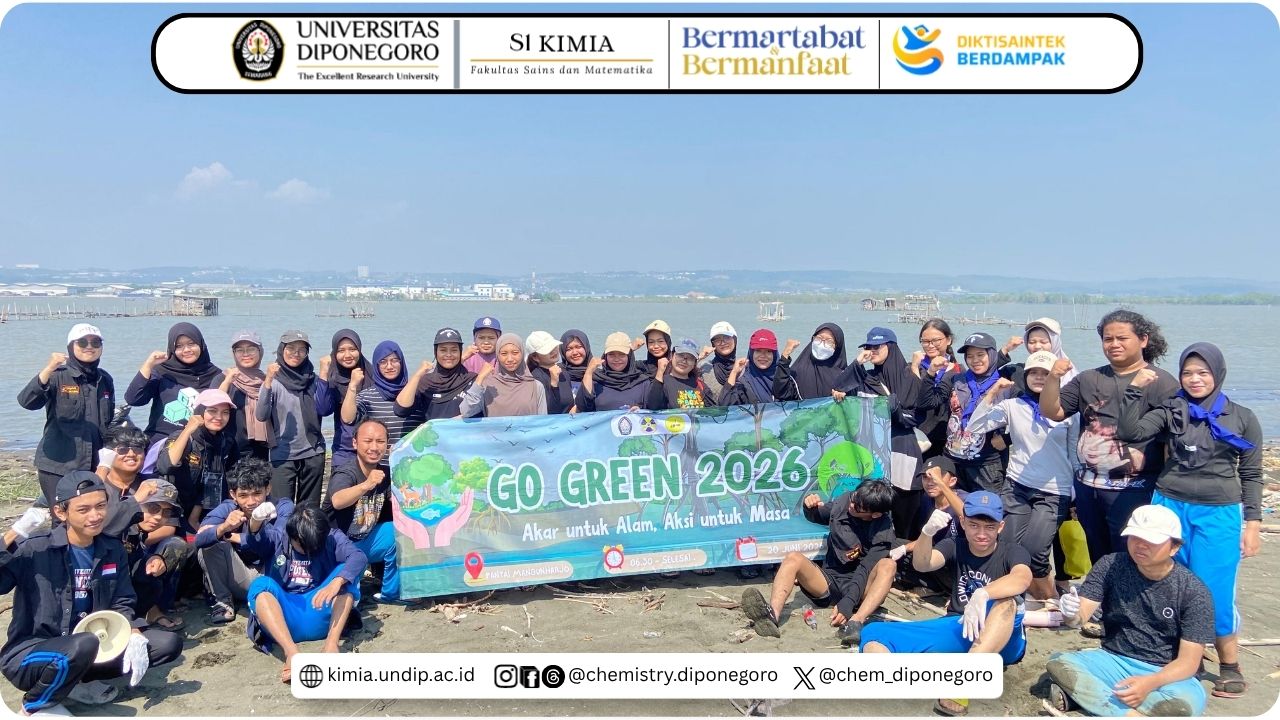
Semarang, June 20, 2026 – Students from the Department of Chemistry, Universitas Diponegoro (UNDIP), through the Sustainable Development Goals (SDGs) Student Program, successfully organized GO GREEN 2026 at Mangunharjo Beach, Tugu District, Semarang City. The event demonstrated the students’ commitment to environmental sustainability by carrying out a large-scale mangrove planting initiative while promoting awareness of coastal conservation.
Addressing Coastal Environmental Challenges
GO GREEN 2026 was organized in response to the growing environmental challenges faced by Indonesia’s coastal regions, including shoreline erosion, environmental pollution, and the impacts of climate change. Through this initiative, Chemistry students took an active role in protecting coastal ecosystems while contributing to the achievement of the United Nations Sustainable Development Goals (SDGs), particularly:
- SDG 13: Climate Action
- SDG 14: Life Below Water
- SDG 15: Life on Land
Planting 1,000 Mangroves for a Sustainable Coastline
As part of the program, participants planted 1,000 Rhizophora mucronata mangrove seedlings along vulnerable coastal areas threatened by erosion.
This mangrove species was selected for its excellent adaptability to muddy coastal environments, its effectiveness in reducing coastal erosion, and its significant ecological functions. In addition to protecting shorelines, Rhizophora mucronata plays an important role in carbon sequestration, improving coastal water quality, and providing habitat for various marine organisms.
Environmental Education and Community Engagement
Beyond the planting activity, GO GREEN 2026 emphasized environmental education and community participation. Participants received valuable insights into the ecological importance of mangrove forests and their role in maintaining healthy coastal ecosystems.
The event also encouraged collaboration between students and the local community, highlighting the importance of collective action in preserving natural resources for future generations.
Supporting Long-Term Coastal Conservation
The mangrove planting initiative is expected to deliver long-term environmental benefits, including reducing coastal abrasion, enhancing biodiversity, improving coastal habitat quality, and increasing public awareness of environmental conservation.
Through GO GREEN 2026, Universitas Diponegoro’s Chemistry students reaffirmed their commitment to sustainable development by transforming academic knowledge into meaningful environmental action. The program serves as a strong example of how collaboration between universities and local communities can contribute to building a greener, more resilient, and sustainable future.