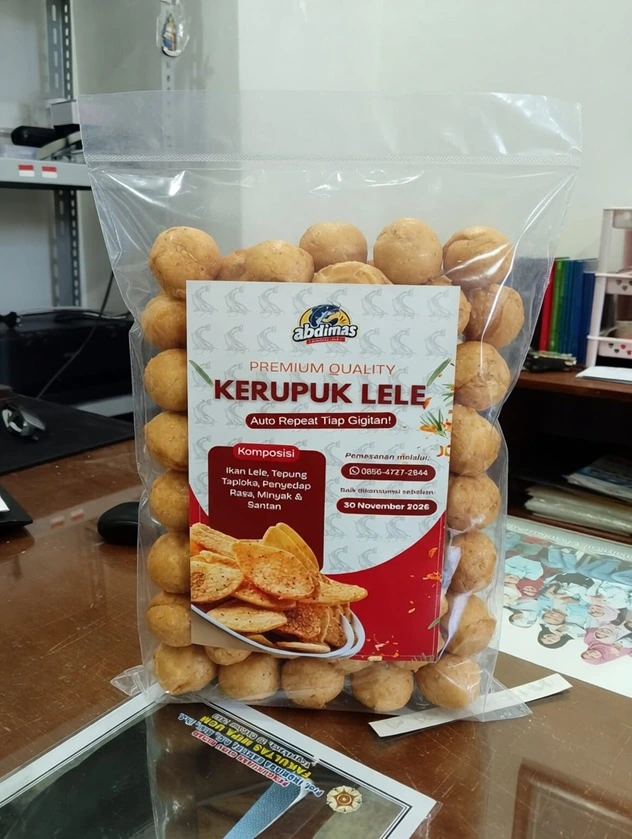
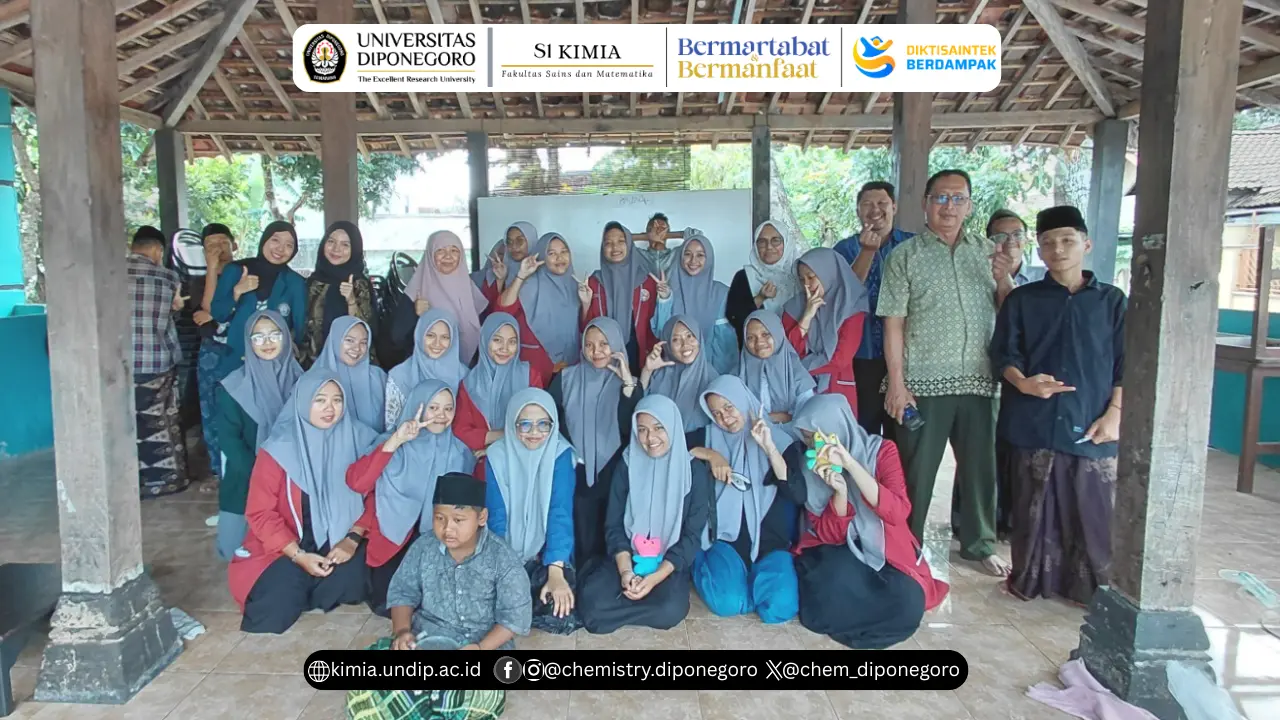
Sleman – A team of lecturers from the Department of Chemistry, Faculty of Science and Mathematics, Universitas Diponegoro, carried out a Community Service (PkM) program at Al-Mahbubiyah Islamic Boarding School, Sleman, on Wednesday, April 29, 2026. The team consisted of Dr. Marcelinus Christwardana, Prof. Gunawan, Dr. Retno, Didik SW, M.Si., and Linda Suyati, M.Si. The program was themed “Production of Catfish Crackers as an Effort to Alleviate Poverty and Strengthen Food Security among Santri of PP Al-Mahbubiyah Sleman.”
This initiative aimed to enhance the knowledge and practical skills of the students (santri) in processing catfish into value-added food products with the potential to be developed into an independent business within the boarding school. The activity was attended by 27 participants, including students and boarding school administrators, who showed strong enthusiasm throughout the program.
The head of the community service team, Dr. Marcelinus Christwardana, explained that catfish was chosen as the main raw material due to its abundant availability, high nutritional value, and relatively low production cost.
“Through this training, we aim to encourage students to utilize local resources to create nutritious food products that also offer economic opportunities,” he stated.
The program was conducted in two main sessions. The first session consisted of an interactive presentation covering the nutritional potential of catfish as a protein source, the step-by-step process of making catfish crackers, and the business and marketing prospects of processed fish products. This session also included an engaging discussion, where participants actively asked questions about production techniques and business development.
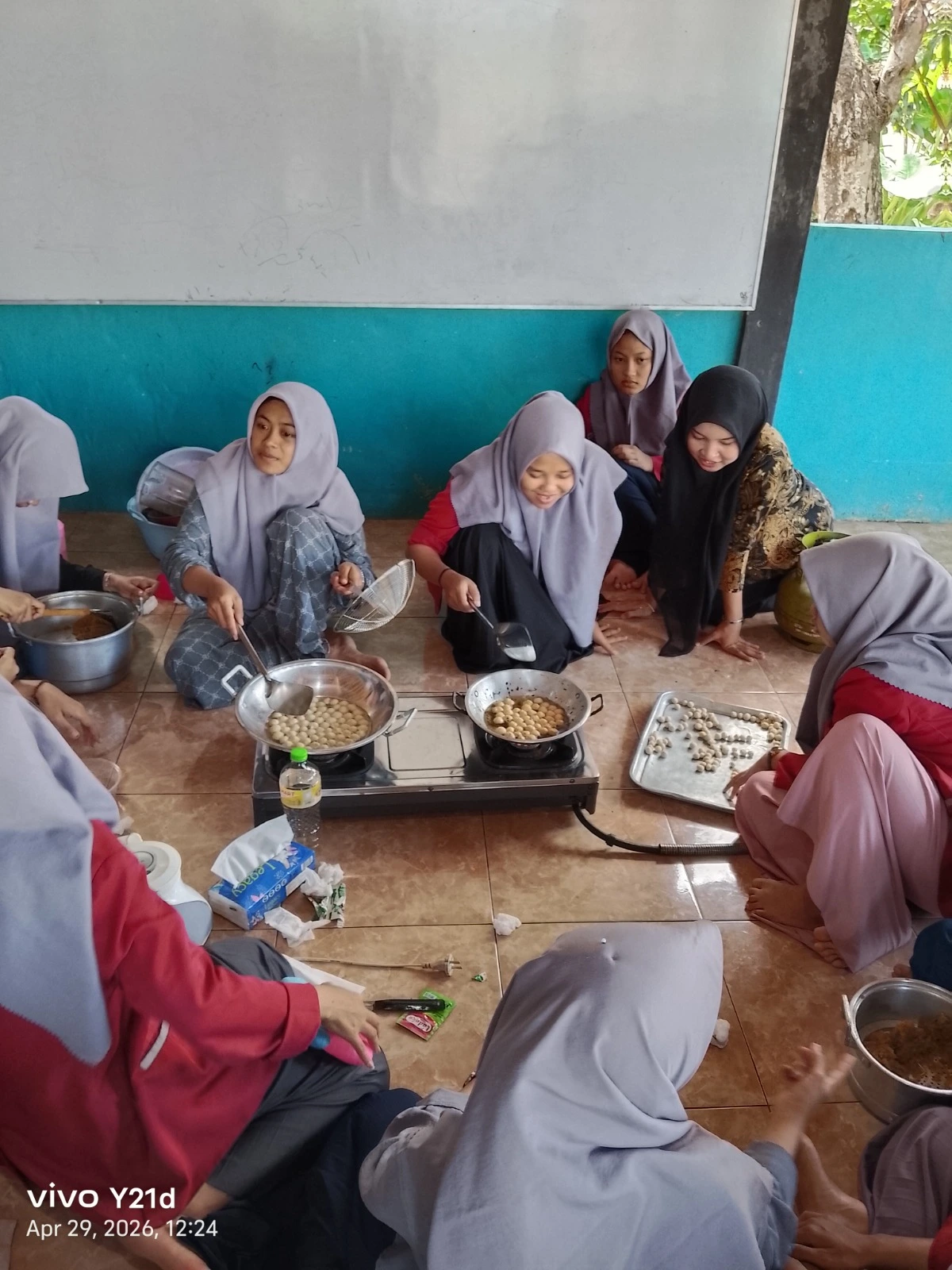
In the second session, the team conducted a hands-on demonstration of catfish cracker production. Participants were directly involved in every stage of the process, including cleaning the fish, grinding the meat, preparing the dough, steaming, slicing, and frying the crackers. This practical approach was designed to provide real experience and ensure that participants can independently apply these skills in the future.
One of the participants, Fahri, shared his impressions of the activity:
“Usually, catfish is only cooked as a daily dish. Through this program, we learned that it can be turned into delicious crackers that also have selling value.”
The results of the activity showed that participants were able to understand and successfully practice the process of making catfish crackers. The products produced were crispy and well-received in terms of taste. Additionally, several participants proposed ideas for developing new flavor variations as future product innovations.
Through this program, the community service team hopes that the skills acquired by the students will serve as an initial step toward building economic independence within the boarding school, while also supporting food security based on local resources. The team also encourages further mentoring to ensure the sustainable development of catfish cracker production as a potential business unit within the pesantren.