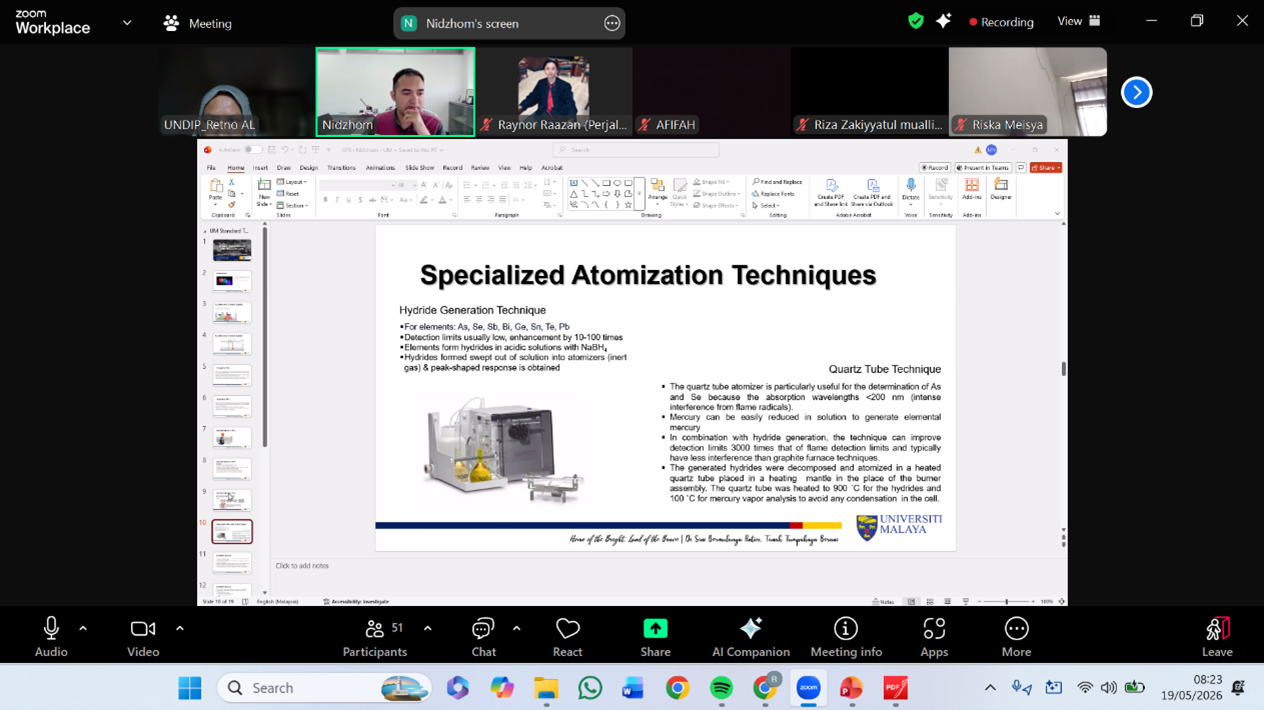
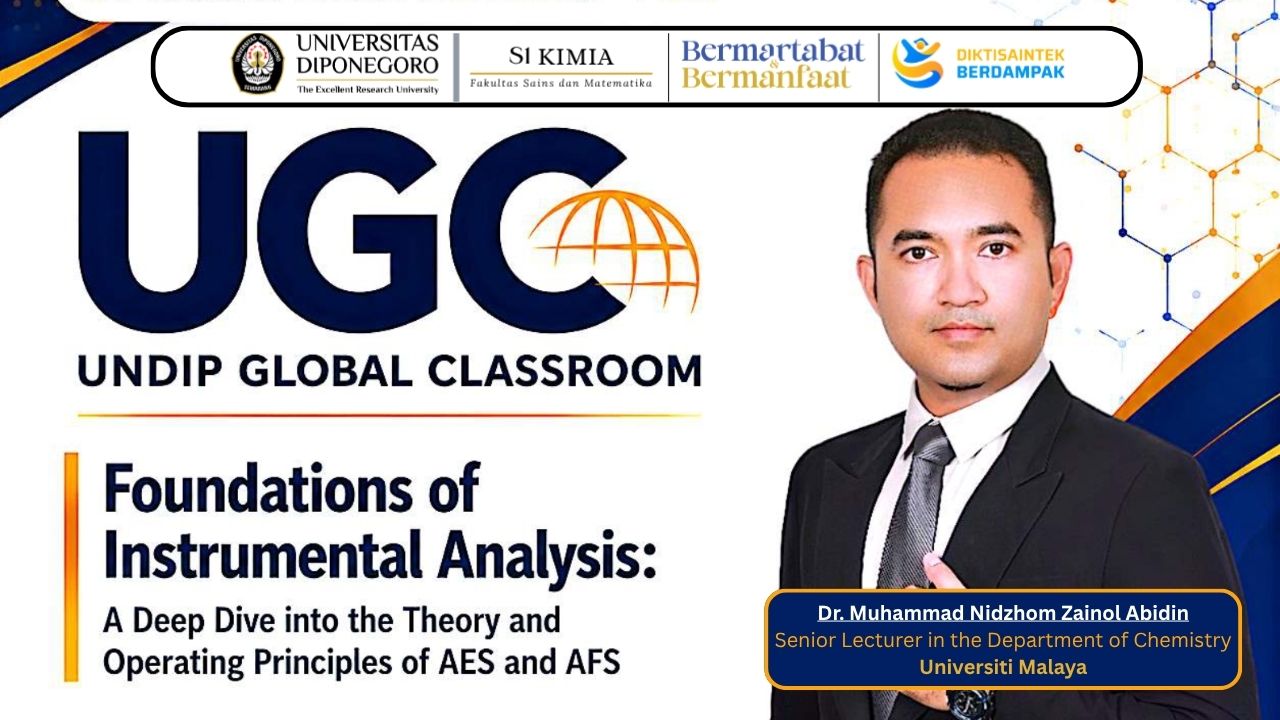
Semarang, May 26, 2026 — Diponegoro University once again strengthened its international academic network through the Undip Global Classroom (UGC) program held on Tuesday, May 12 and May 19, 2026. The event featured an international speaker, Dr. Muhammad Nizdhom Zainol Abidin from Universiti Malaya, who delivered presentations on Atomic Emission Spectroscopy (AES) and Atomic Fluorescence Spectroscopy (AFS).
This international online academic activity was guided by Dr. Retno Ariadi Lusiana as the person in charge (PIC) and discussion moderator. The event was highly interactive, with participation from lecturers, researchers, and students interested in advanced spectrometry instrumentation.
In his presentation, Dr. Nizdhom explained the latest developments in spectroscopic instrumentation, both in theory and applications in the field of materials science. Atomic Emission Spectroscopy (AES) is a chemical analysis method that utilizes the intensity of light emitted by excited atoms or ions to determine the concentration of an element in a sample. In general, AES instrumentation consists of main components including an excitation source (such as Inductively Coupled Plasma / ICP or a flame), which functions to convert the sample into atomic vapor and provide energy to excite electrons to higher energy levels. When these electrons return to their ground state, they emit light at wavelengths specific to each element. This polychromatic light is then passed through a monochromator or spectrometer to separate it according to wavelength before its intensity is measured by a detector (such as a Photomultiplier Tube / PMT or CCD detector) and processed into quantitative data by a computer system.
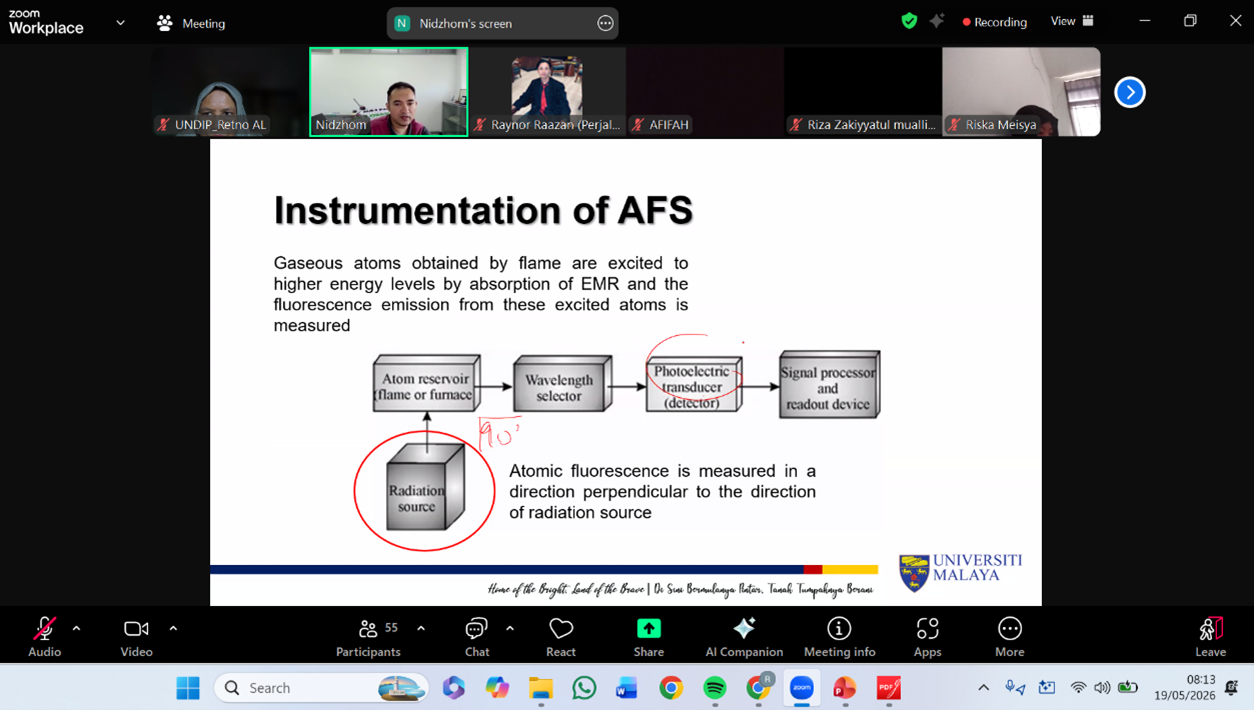
Atomic Fluorescence Spectroscopy (AFS) is a spectroscopic analytical method that measures the intensity of fluorescence light emitted by atoms in the gaseous state after absorbing electromagnetic radiation. In terms of instrumentation, the sample is first converted into atomic vapor by an atomization source (usually a flame or Inductively Coupled Plasma). These free atoms are then excited using a high-intensity radiation source, such as a Hollow Cathode Lamp (HCL) or laser, positioned at a perpendicular angle 90∘90^{\circ} relative to the detector to minimize interference from the primary light source. When the excited electrons return to lower energy levels, they emit fluorescence photons, which are separated by a monochromator based on wavelength and measured by a detector to determine elemental concentrations with very high sensitivity, especially for trace metal analysis such as mercury (Hg) and arsenic (As).
Dr. Retno Ariadi Lusiana stated that the Global Classroom program is part of Diponegoro University’s commitment to expanding international collaboration, enhancing the global academic atmosphere, and strengthening multidisciplinary research development in biomaterials and active compound delivery systems.
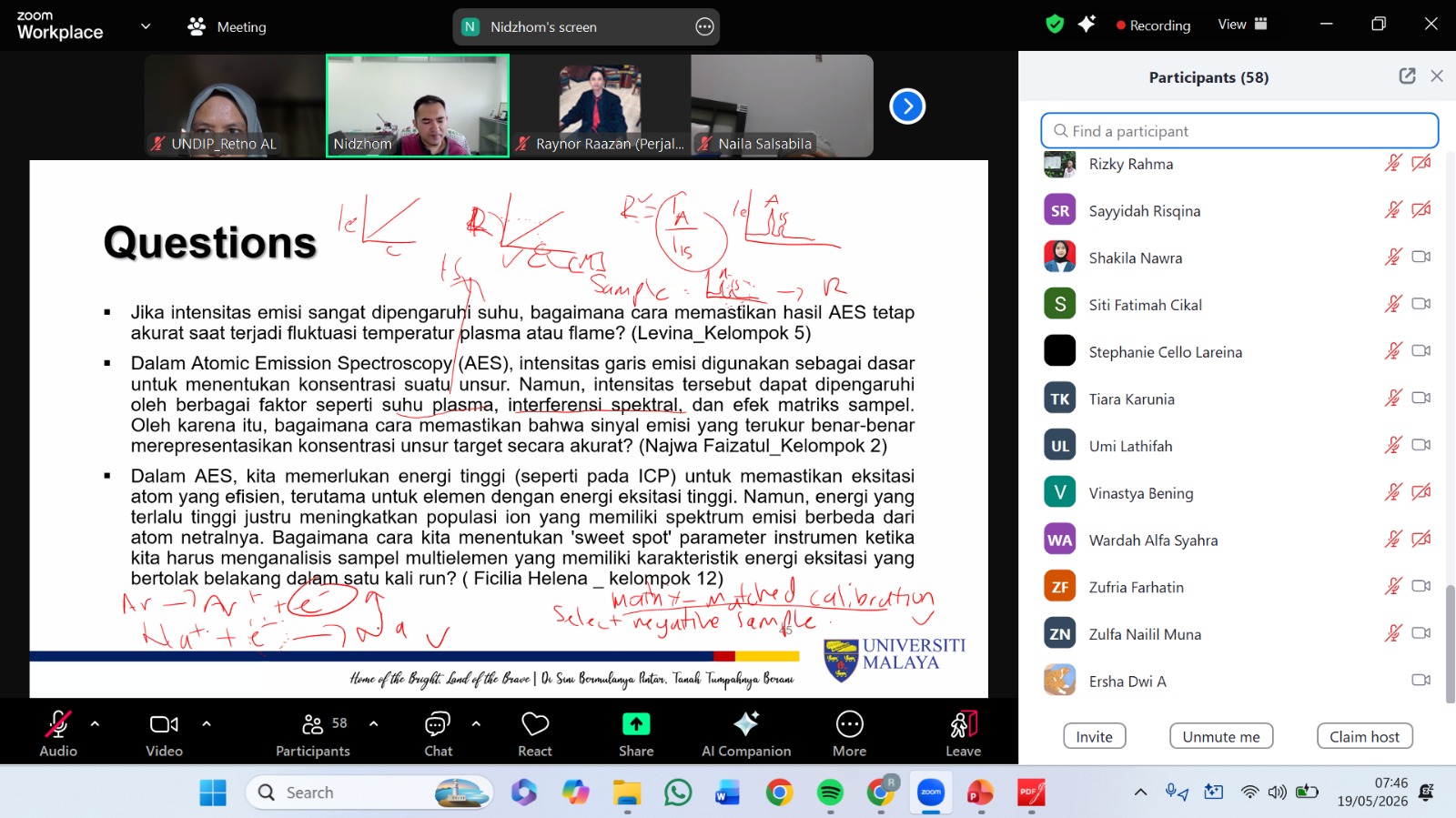
The discussion session proceeded dynamically through a question-and-answer session covering opportunities for research collaboration, the development of AES and AFS technologies for teaching and research, as well as future challenges in instrument utilization. This activity is expected to open opportunities for academic and research collaboration between Diponegoro University and Universiti Malaya, particularly in the fields of research and education.
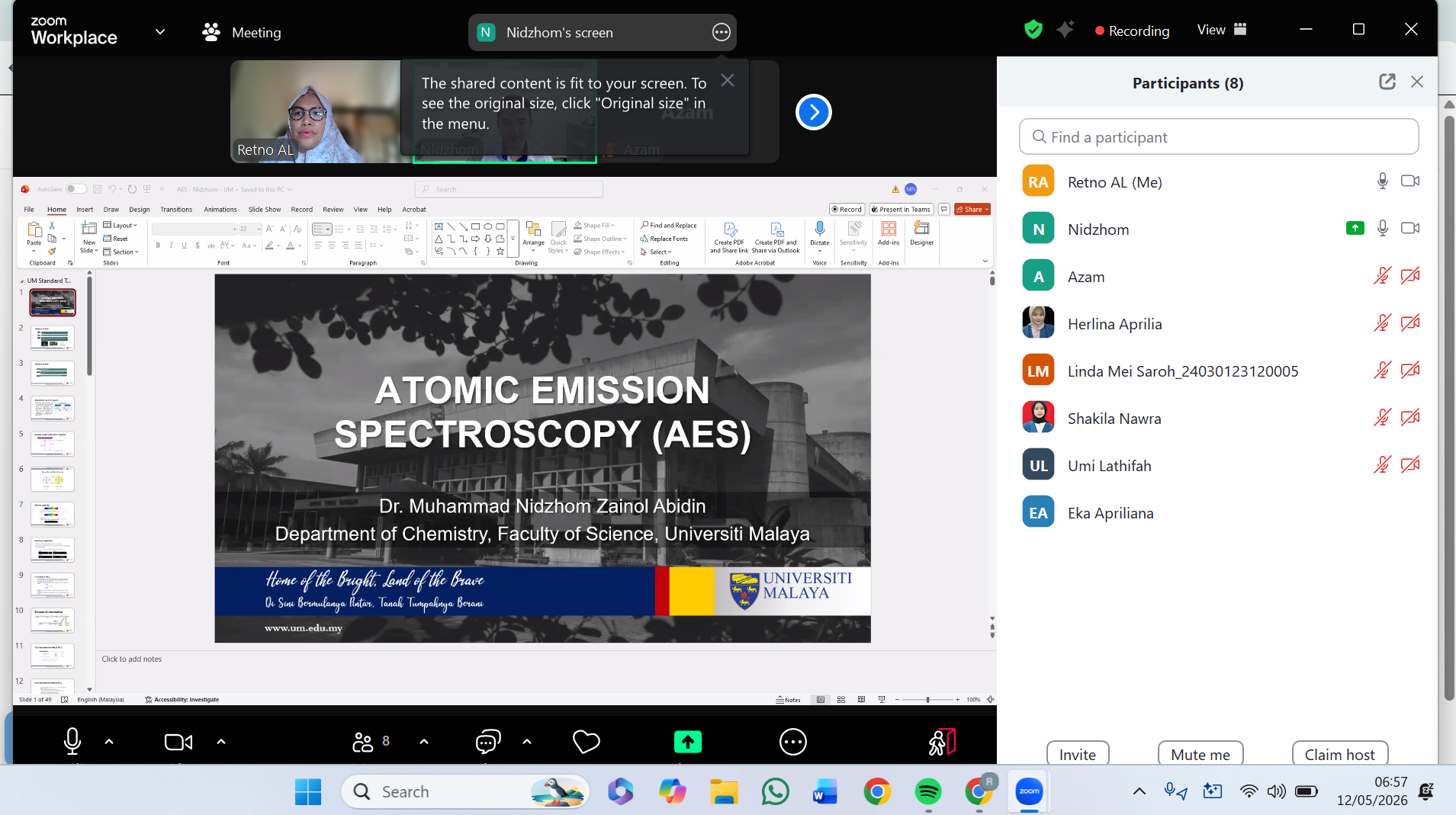
Documentation of the Activities on May 12, 2026
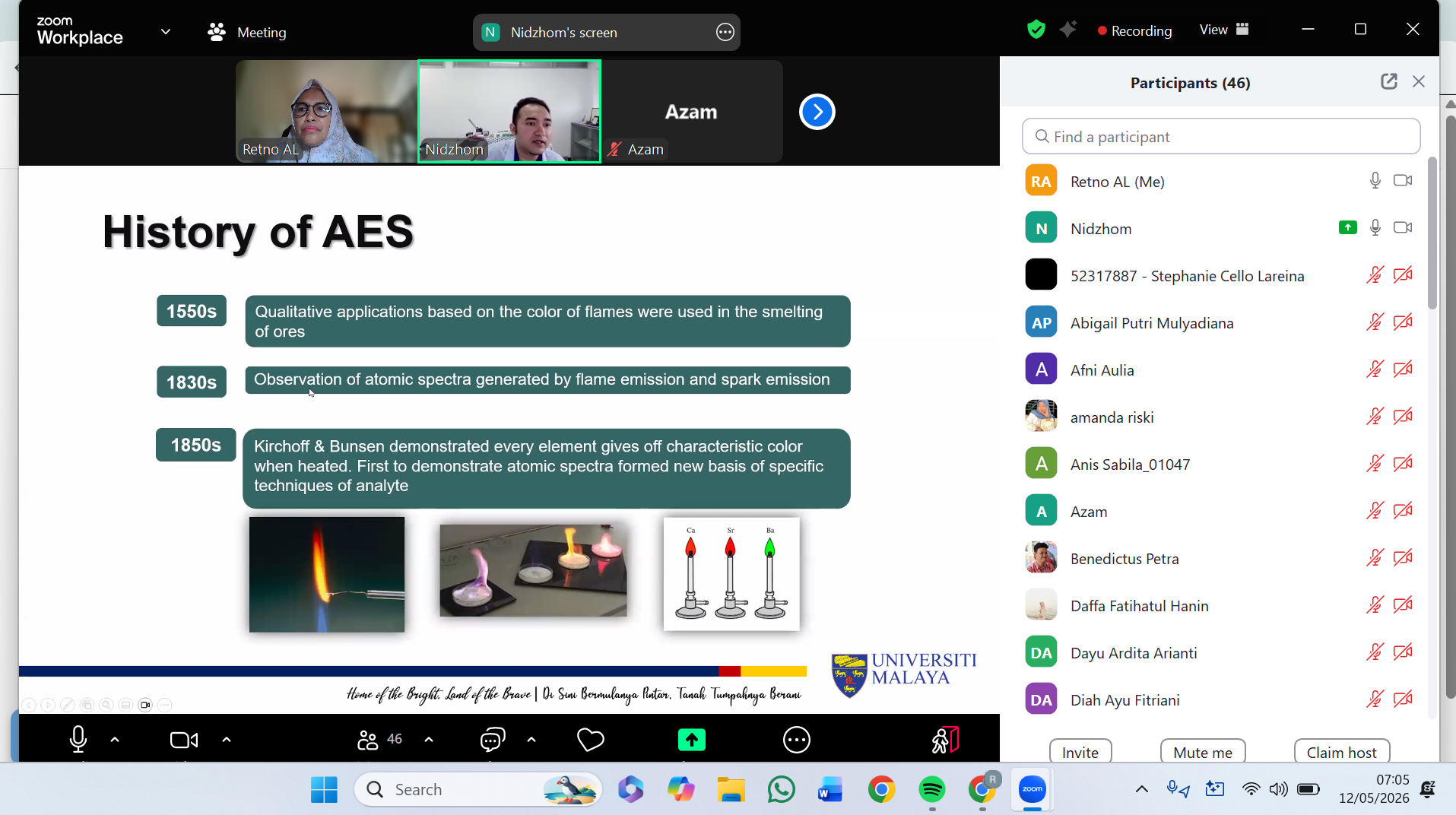
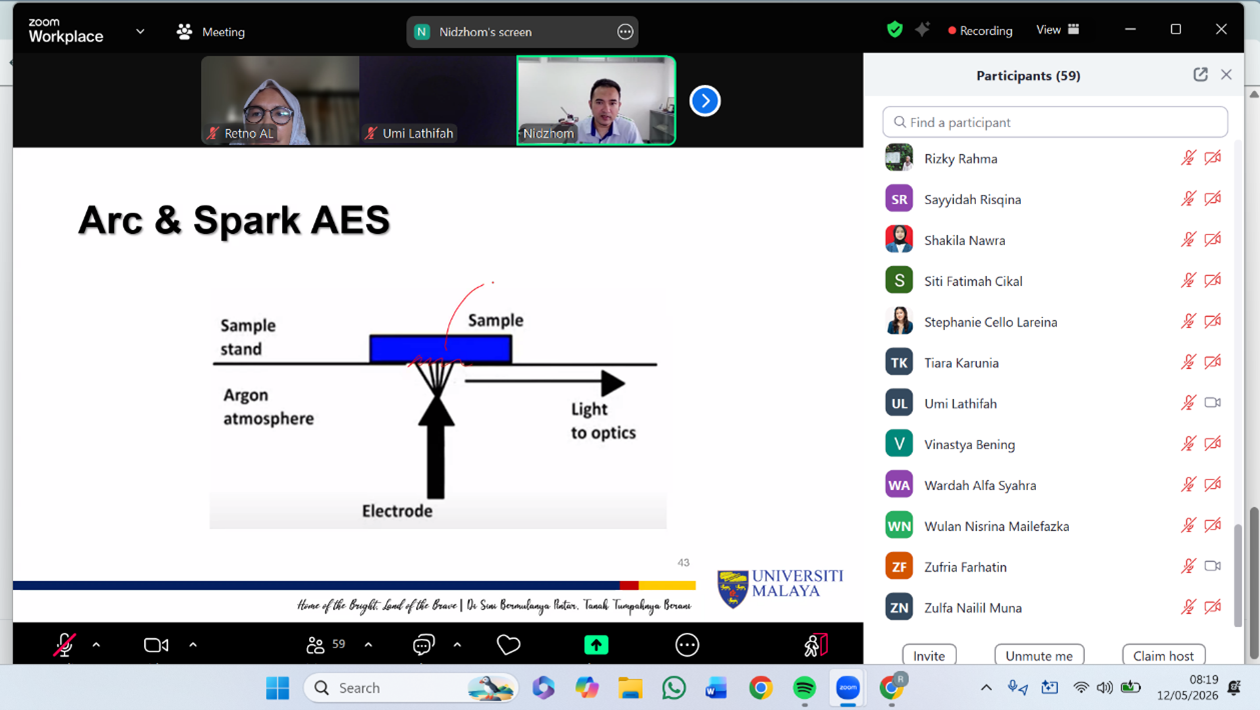
Documentation of the Activities on May 19, 2026