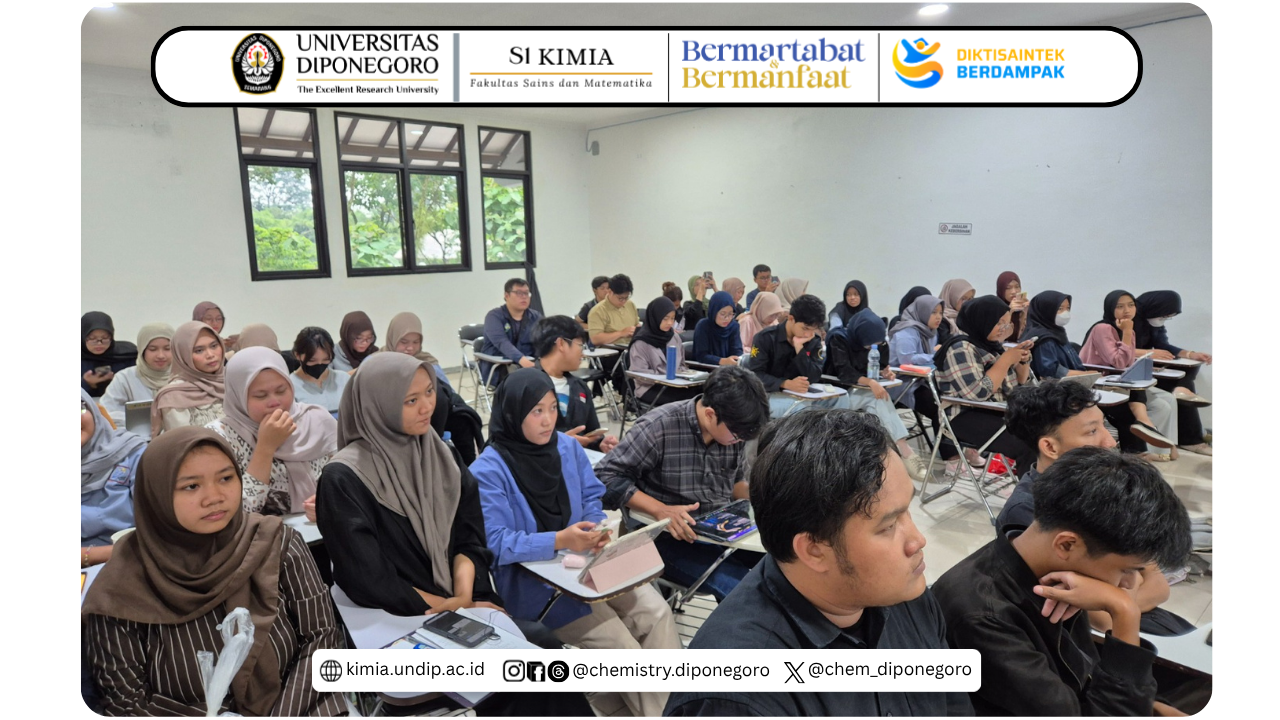
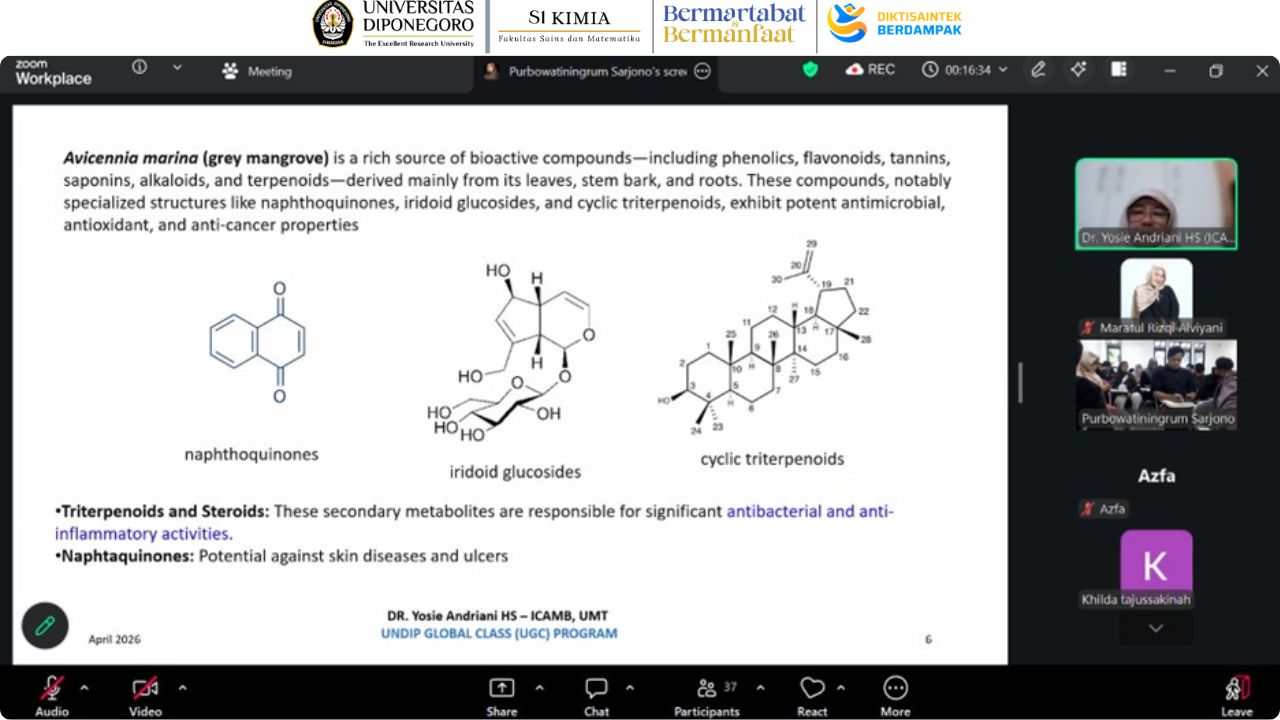
The UNDIP Global Classroom (UGC) activity in the Basic Biotechnology Engineering course was conducted in a hybrid format, both offline and online, as part of strengthening international insight and developing students’ academic competencies in the field of biochemistry. The activity was held on Tuesday, April 28, 2026.
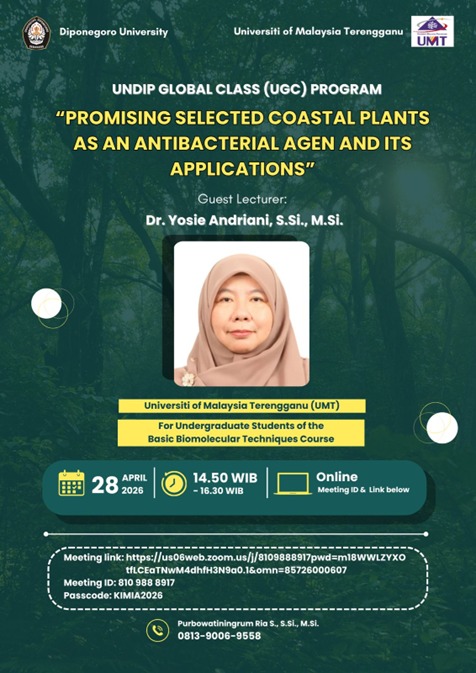
This activity featured an international speaker, Dr. Yosie Andriani from the Higher Institution Centre of Excellence (HICoE), Institute of Climate Adaptation and Marine Biotechnology (ICAMB) – Universiti Malaysia Terengganu, with the presentation entitled “Promising Selected Coastal Plants as Antibacterial Agent and Its Application.”
The activity was carried out in a hybrid mode: students attending the Basic Biomolecular Engineering course participated in person in the classroom, while the speaker and other participants joined through a virtual conferencing platform that enabled students and lecturers to engage interactively despite being in different locations. In her presentation, Dr. Yosie explained the potential of various coastal plants as sources of natural antibacterial compounds that can be utilized in health, food, and environmental biotechnology. The material covered the bioactive compounds of coastal plants, antibacterial mechanisms, extraction methods, and opportunities for their application in the development of biotechnology-based products.
This activity provided students with new insights into the importance of exploring coastal biological resources as environmentally friendly alternatives to natural antibacterial agents. In addition, students gained a deeper understanding of current international developments in marine biotechnology and climate adaptation research. Through discussion and question-and-answer sessions, students were able to interact directly with the speaker, creating an active and collaborative learning atmosphere.
This UNDIP Global Classroom became one form of the implementation of higher education internationalization that supports improving the quality of learning in the Basic Biomolecular Engineering course. The activity not only broadened students’ academic perspectives but also enhanced their scientific communication skills, critical thinking abilities, and understanding of global issues in biotechnology and environmental studies.
Overall, the implementation of the UGC collaboration with Universiti Malaysia Terengganu ran successfully and provided valuable international learning experiences for students. It is hoped that similar activities can continue to be carried out as an effort to strengthen academic collaboration, research, and the exchange of knowledge among higher education institutions at the global level.