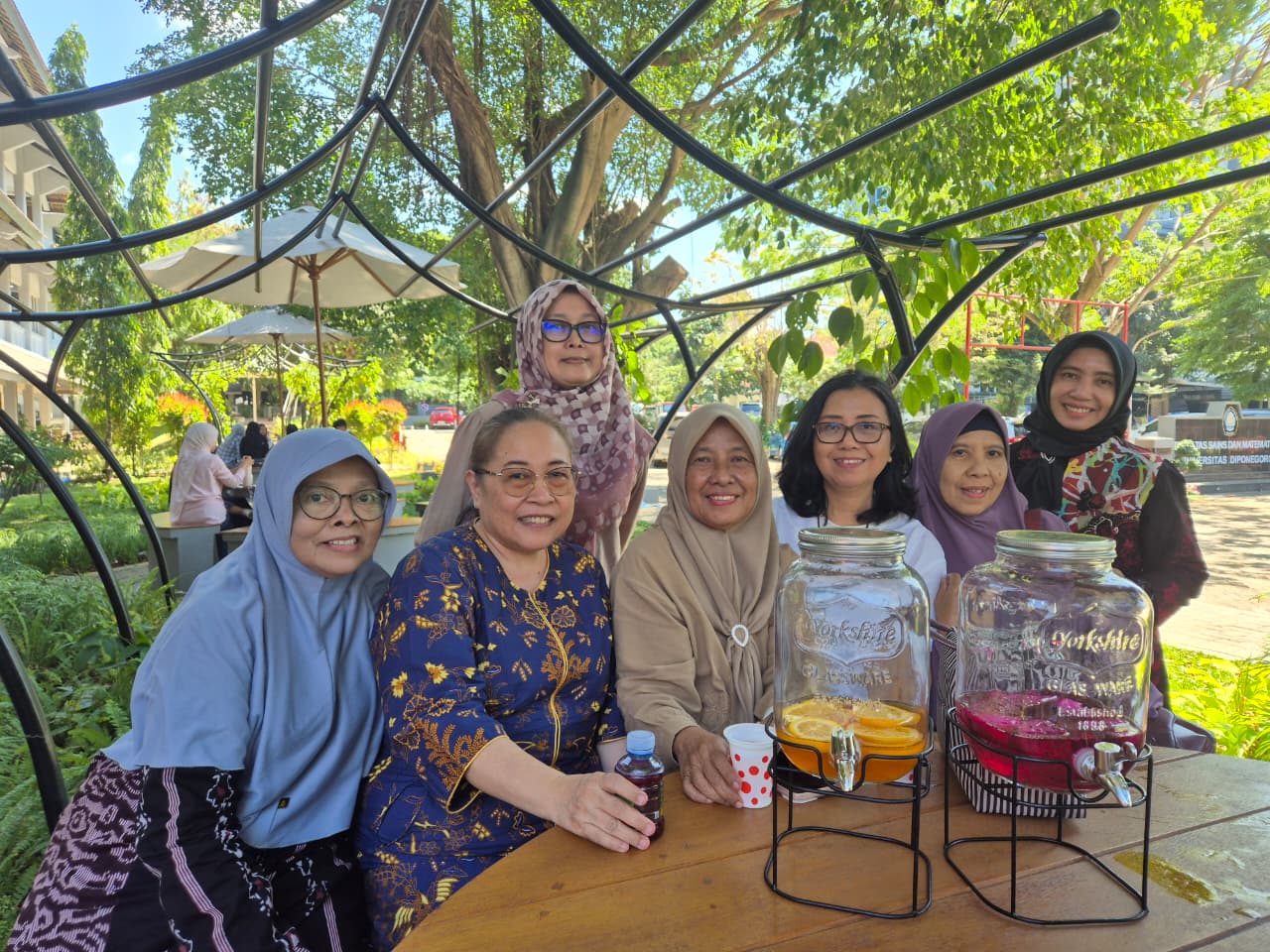
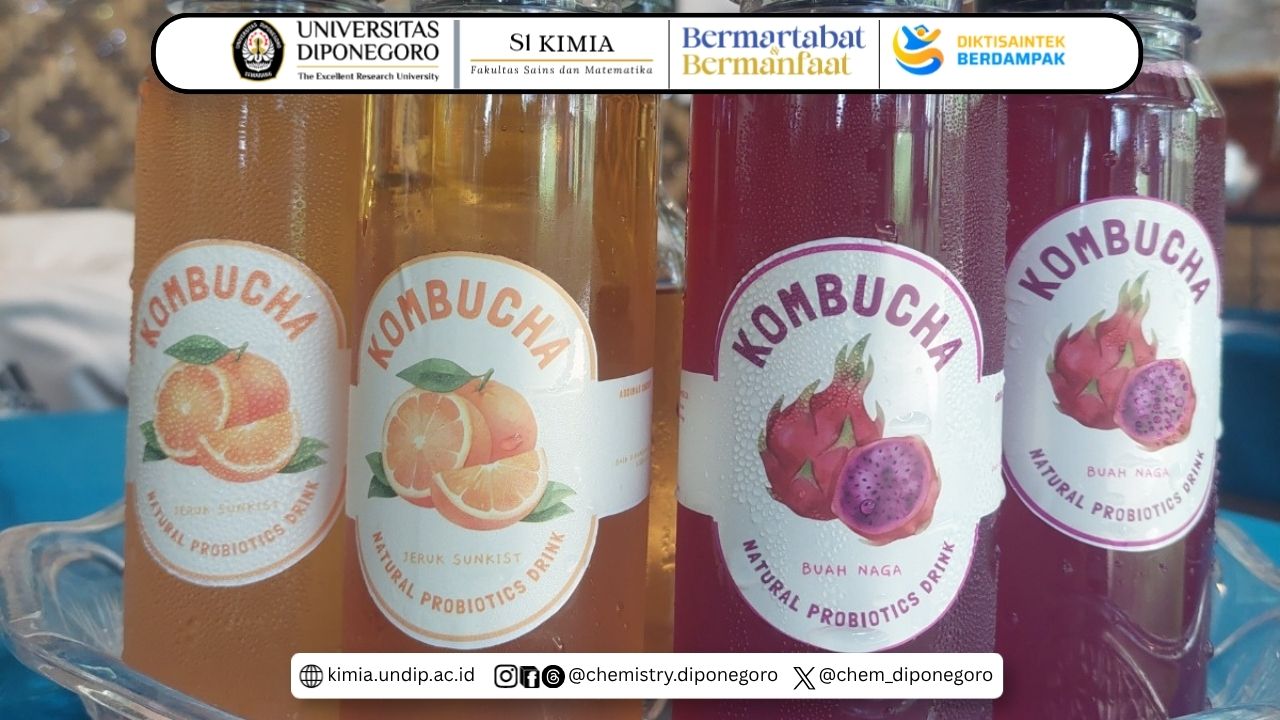
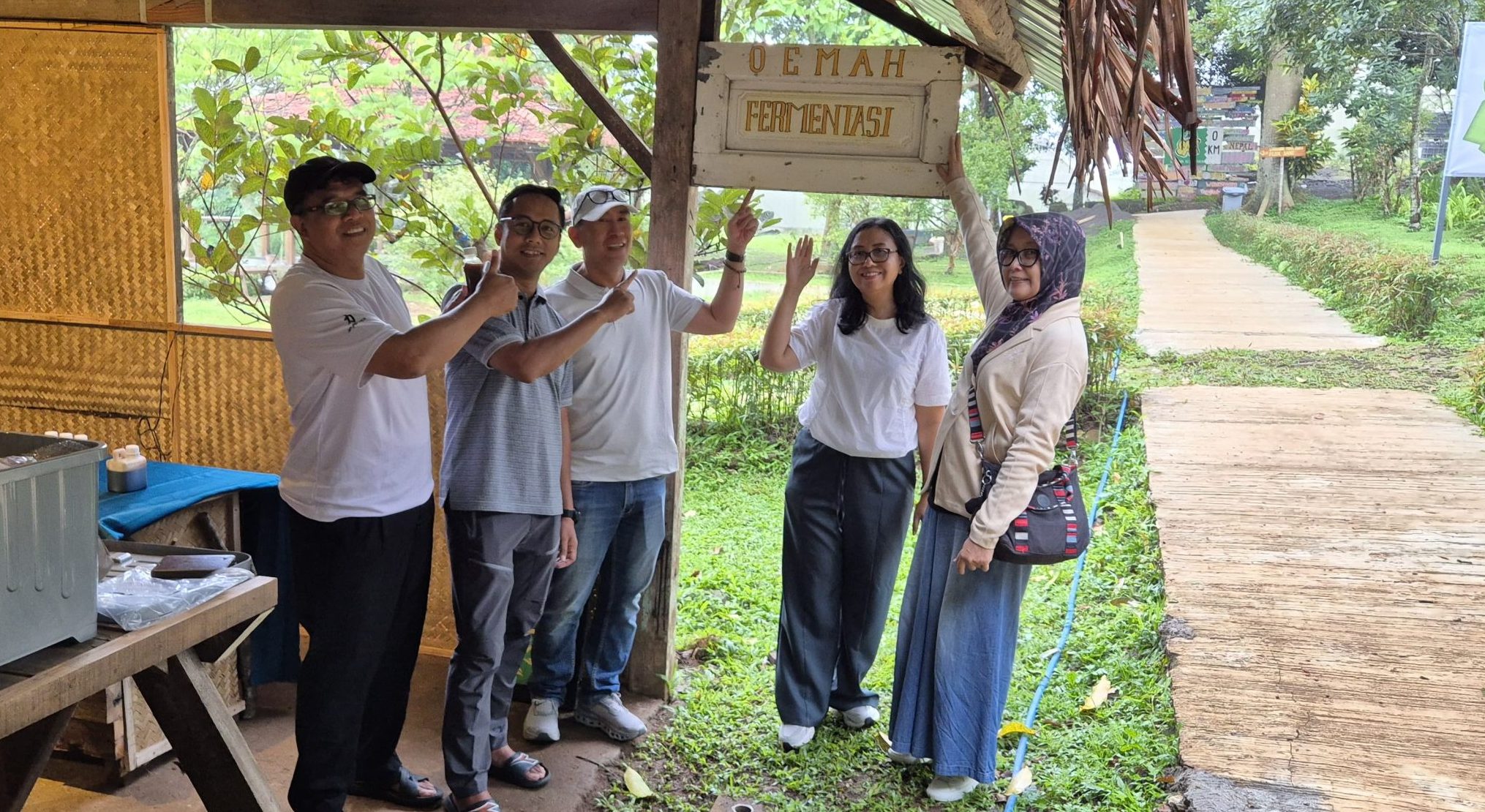
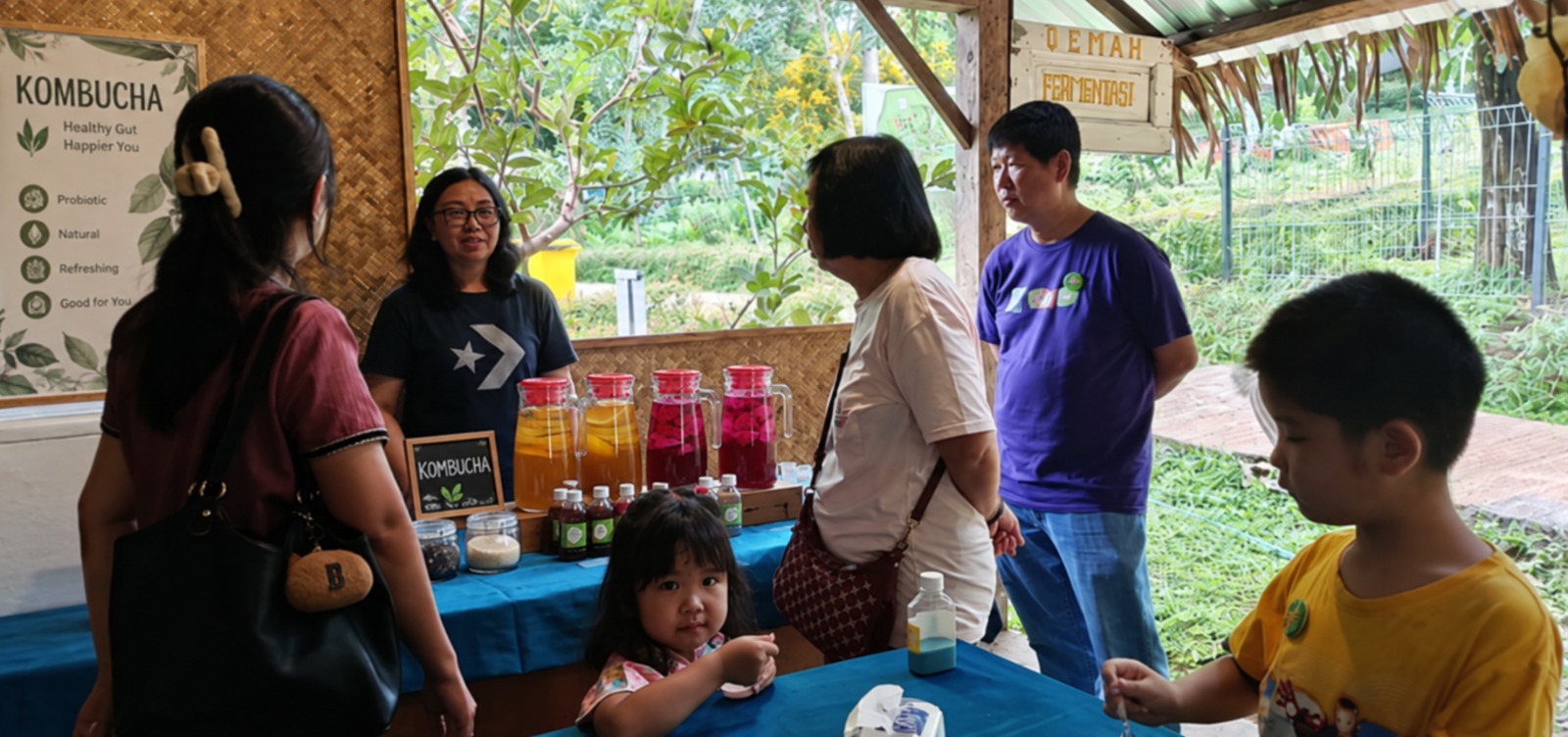
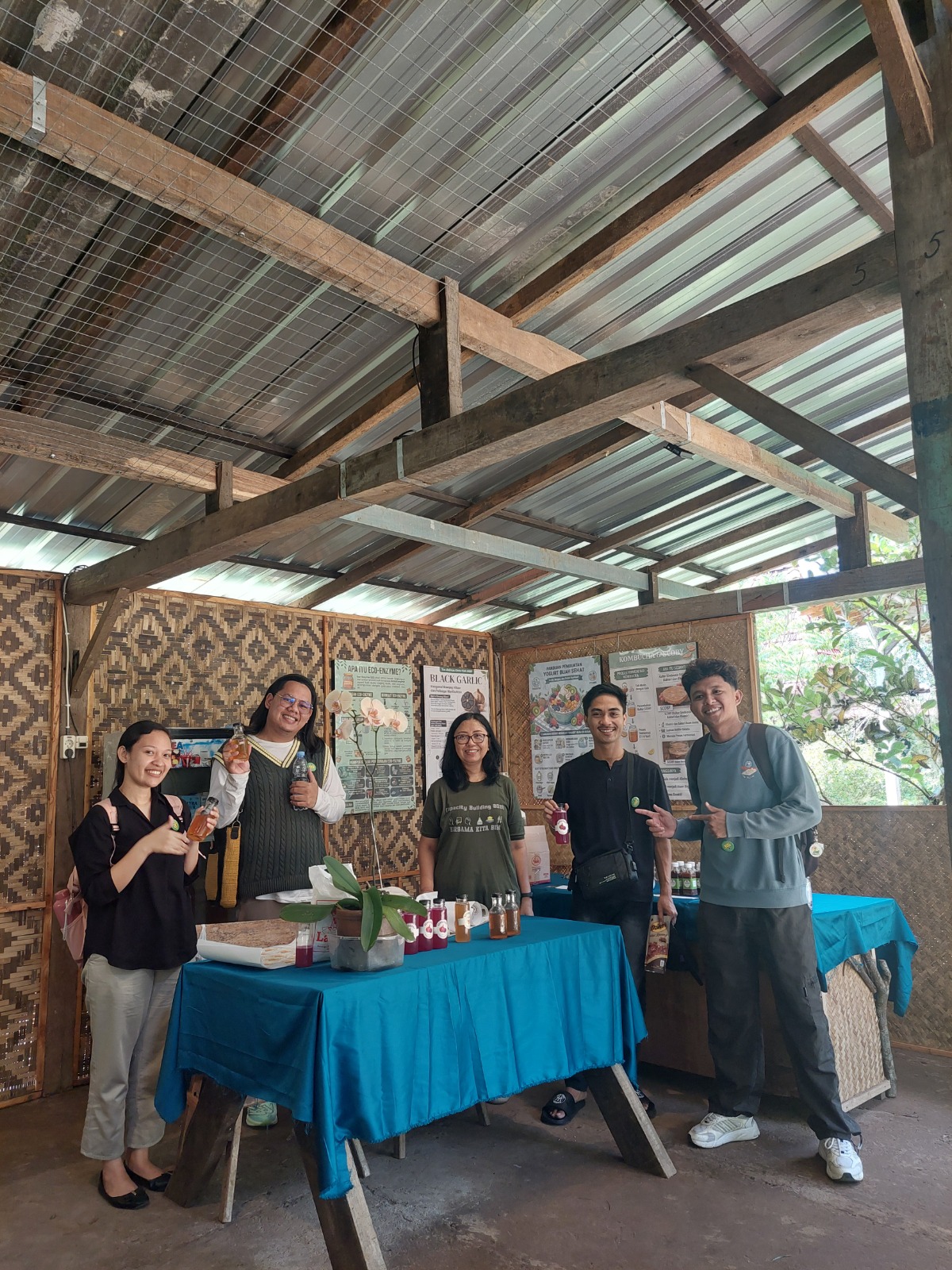
Semarang, July 2026 — The Department of Chemistry, Faculty of Science and Mathematics (FSM), Diponegoro University (UNDIP), continues to promote science-based education through the OEMAH FERMENTASI Stand at SAE Ecopark. One of the featured topics during this period was kombucha fermentation, introduced to visitors through educational activities and hands-on training in the production of fermented products.
The presence of the OEMAH FERMENTASI Stand represents one of the Department of Chemistry FSM UNDIP’s community engagement initiatives, bringing chemistry closer to the public in a practical, accessible, and easy-to-understand format. Through the stand, visitors can gain insights into various fermentation processes while exploring their applications in producing products commonly encountered in everyday life.
Introducing the Kombucha Fermentation Process
During this activity, Prof. Tri Windarti served as the speaker for the training session entitled “The Process of Producing Kombucha Fermented Products.” The session was delivered interactively, inviting visitors to explore the fundamental principles of fermentation and the stages involved in kombucha production.
The community engagement team supporting the activity included Purbowatiningrum, M.Si., Prof. Ngadiwiyana, Prof. Ismiyarto, and Nor Basid, Ph.D.
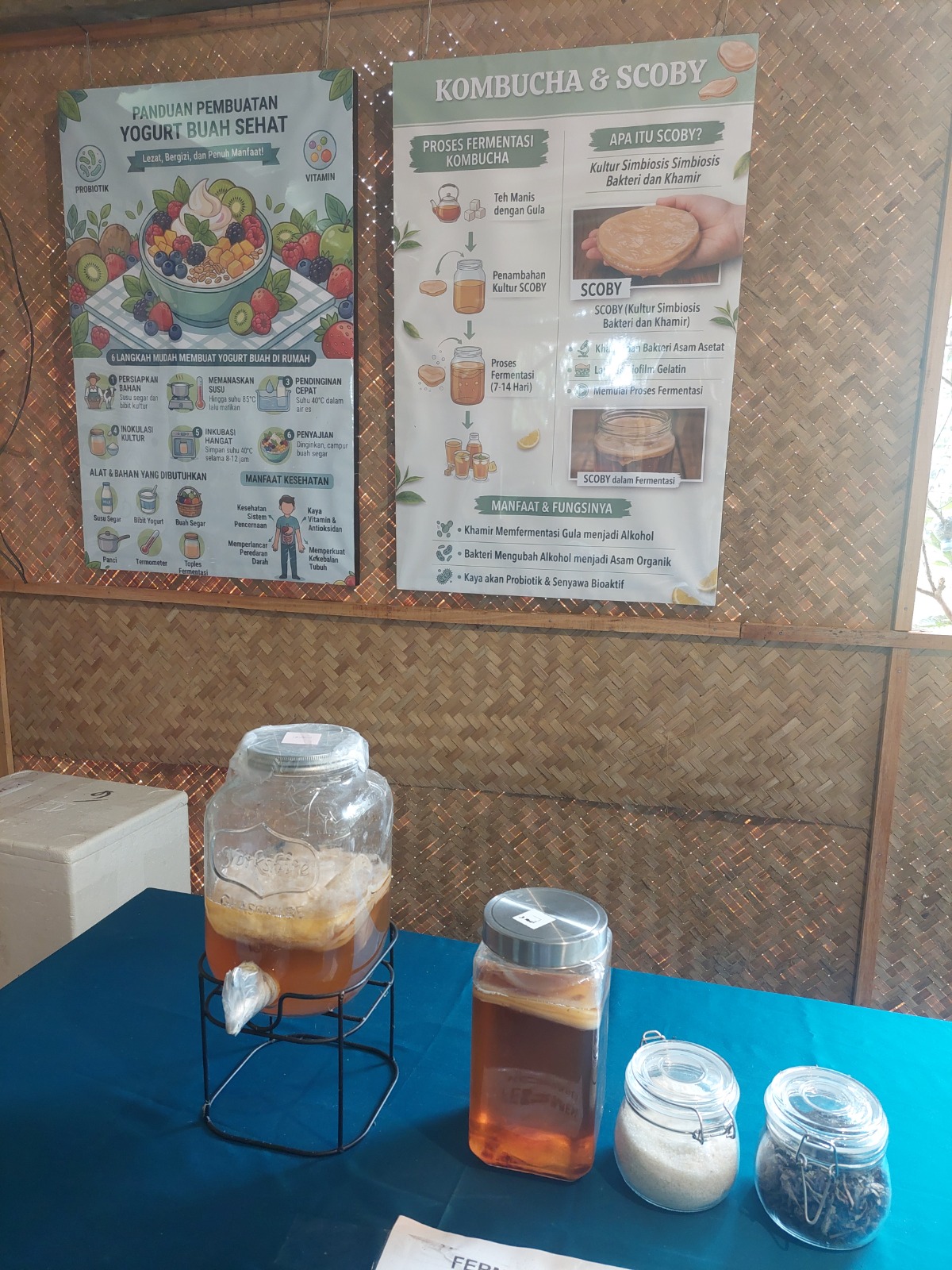
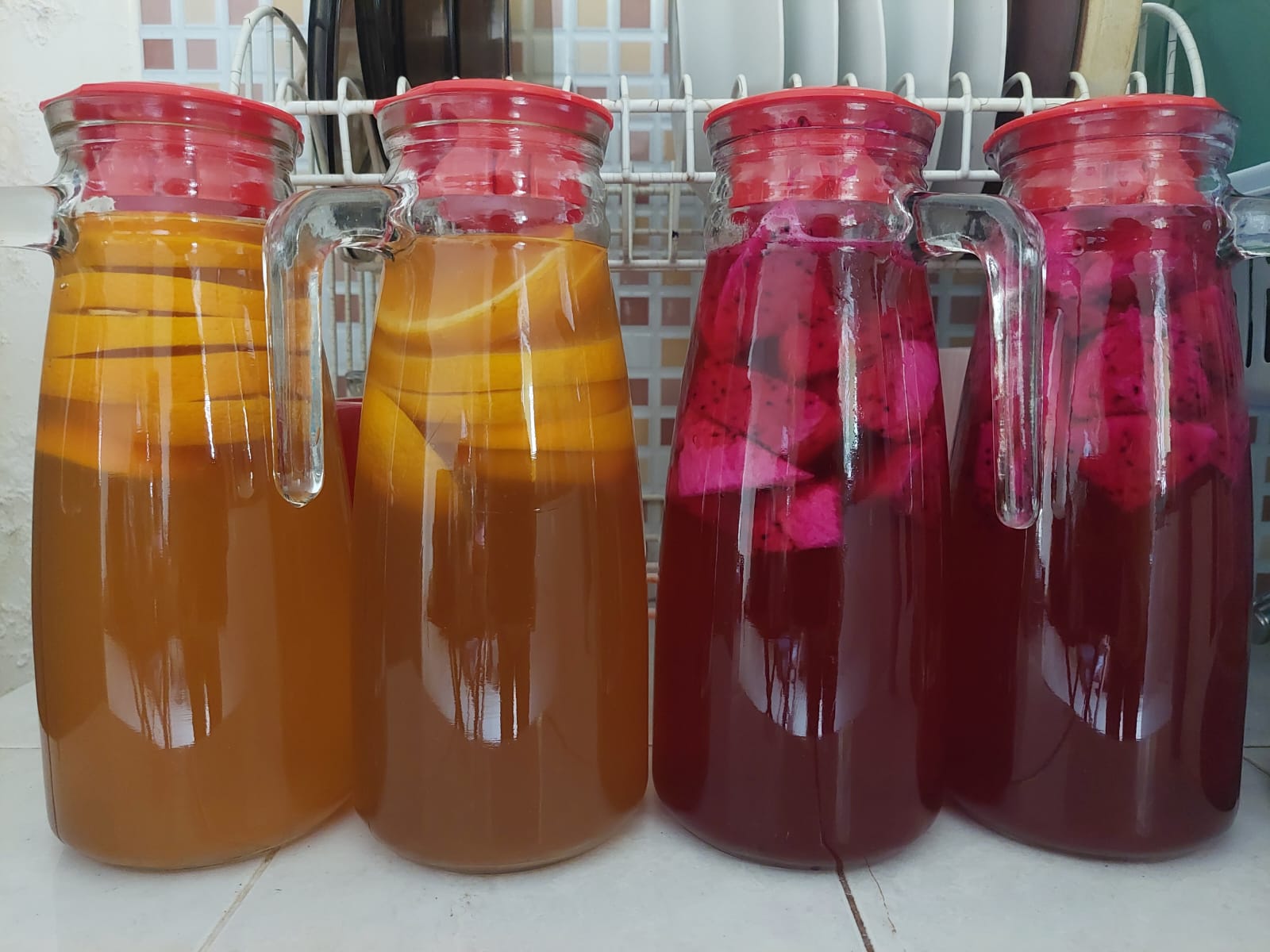
Kombucha is a fermented product made from a tea and sugar solution using a microbial culture known as SCOBY (Symbiotic Culture of Bacteria and Yeast). The fermentation process involves the activity of bacteria and yeast, which produce changes in the characteristics of the tea solution as fermentation progresses.
During the training, Prof. Tri Windarti explained the kombucha production process step by step, beginning with the preparation of ingredients and equipment, followed by the preparation of the tea solution, addition of sugar, cooling, introduction of the culture, and the fermentation stage.
Participants also learned about the importance of maintaining the cleanliness of equipment and ingredients, as well as monitoring conditions throughout the fermentation process. These explanations helped visitors understand that the success of fermentation depends not only on the ingredients used but also on the conditions and stages of the process.
“Fermentation is a process that is closely connected to our daily lives. Through activities like this, the public can see how chemistry concepts studied academically can be applied to simple processes and used to produce a product,” explained Prof. Tri Windarti.
Connecting Chemistry with Everyday Life
The combination of theoretical explanations and practical activities made the training an interactive learning experience. Visitors to the OEMAH FERMENTASI Stand had the opportunity to engage in discussions and ask questions about kombucha fermentation, including the ingredients, fermentation culture, and characteristics of the resulting product.
Through OEMAH FERMENTASI, the Department of Chemistry FSM UNDIP seeks to strengthen science communication with the public through an educational and application-oriented approach. Kombucha fermentation serves as an example of how chemistry, microbiology, and food processing technology can be brought together in a simple activity with meaningful educational value.
This activity also reinforces the role of higher education institutions in implementing the Three Pillars of Higher Education (Tri Dharma Perguruan Tinggi), particularly through community engagement. Knowledge developed within the academic environment is expected to continue reaching the wider community through activities that are relevant to public needs and interests.
Through initiatives such as OEMAH FERMENTASI, the Department of Chemistry FSM UNDIP continues to foster public engagement with science, demonstrating how academic knowledge can be translated into practical learning experiences and meaningful community activities.