The ChemImpact Team from the Department of Chemistry at Universitas Diponegoro (UNDIP) has introduced an innovative educational program titled “Herbal Kids Indonesia: Character-Based Science Animation Series”. This initiative is part of their intellectual property (IP) implementation aimed at enhancing science learning for elementary school students.
Led by Prof. Dr. Bambang Cahyono, the program involves a team of distinguished academics, including Prof. Dr. Meiny Suzery, Dr. Agustina L. N. Aminin, and Prof. Dr. Parsaoran Siahaan. The initiative has been piloted in Semarang Regency, engaging 140 elementary school students as its primary participants.
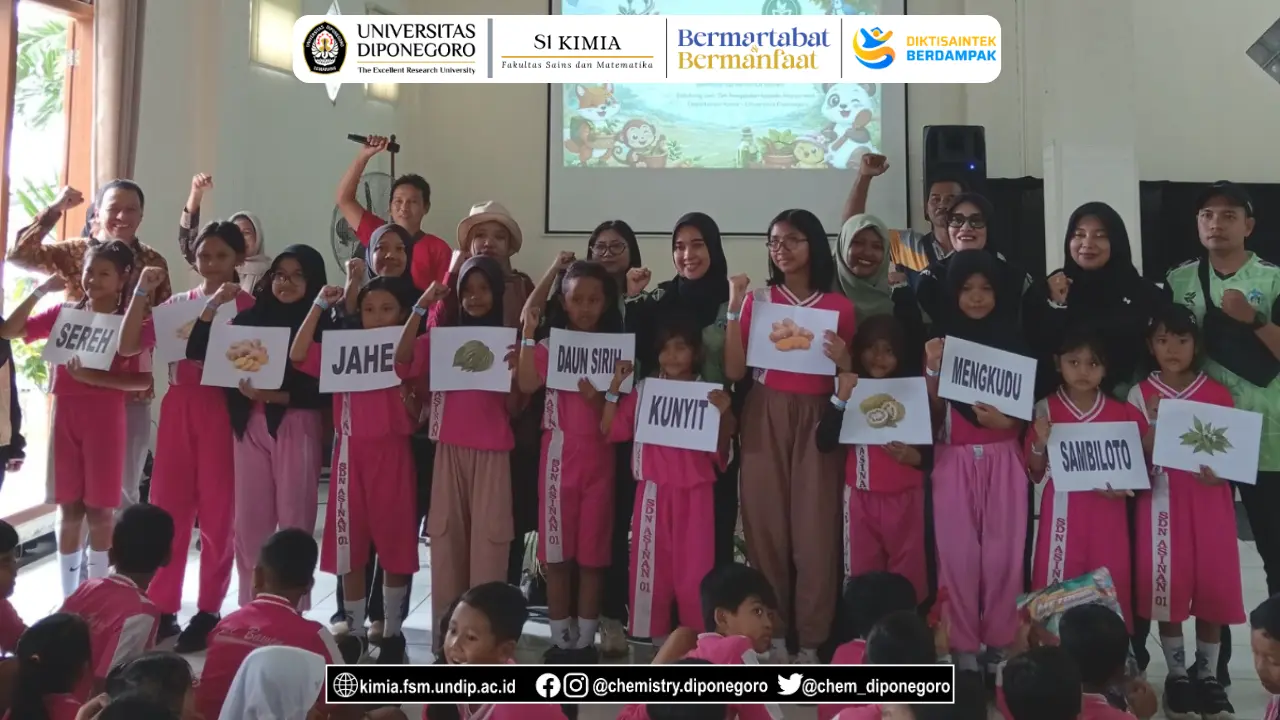
Using an experiential learning approach, students are encouraged to explore various Indonesian herbal plants and spices. They not only learn the scientific concepts behind these natural resources but also gain hands-on experience by processing them into simple products such as healthy drinks.
To make learning more engaging, the program incorporates animated media featuring adorable animal characters. These animations are specifically designed to capture students’ attention and improve their understanding of science concepts in a fun and accessible way.
The activities have been conducted interactively and have received enthusiastic responses from the students. Beyond introducing basic scientific knowledge, the program also instills awareness that herbs and natural ingredients are an integral part of daily life with significant health benefits.
The implementation of Herbal Kids Indonesia reflects a strong commitment to community service while highlighting the active role of UNDIP’s Department of Chemistry in developing educational innovations rooted in local wisdom and creative technology. Moving forward, the program is expected to expand nationally as a model for culturally integrated science education.
Students showed great enthusiasm during the Herbal Kids Indonesia activities, especially when learning about herbal plants and spices through hands-on, experience-based methods.